Artificial Intelligence Mirrors Natural Intelligence

A striking visual metaphor for artificial intelligence and continuous learning, depicting a human brain merging with glowing blue circuitry. Artificial Intelligence Mirrors Natural Intelligence Can we move beyond human education years to hybrid intelligence? A striking visual metaphor for artificial intelligence and continuous learning, depicting a human brain merging with glowing blue circuitry. For the past three years, the conversation around artificial intelligence has been dominated by a single, anxious question: What willRead More

How Neuroscience Can Unlock the Future of AI-Powered Literacy

A small group of people in a panel discussion setting, with one person standing and addressing the others seated on stools. News How Neuroscience Can Unlock the Future of AI-Powered Literacy Michael Platt speaks on a panel at StudyFetch's Enduring Literacy Symposium. Photo: StudyFetch StudyFetch, the AI-powered educational platform serving over 6 million students worldwide, recently hosted the Enduring Literacy Symposium at the University of Pennsylvania. This event gathered some ofRead More

Fertility Rates are Declining. Is Tech to Blame?

platt-falling-fertility-rates-GettyImages-1489423574

Neuroscientists Michael Platt and Peter Sterling highlight that the declining global fertility rate is attributed to increasing social isolation and anxiety, fundamentally altering economic and social landscapes. They emphasize that traditional government interventions have been ineffective, suggesting deeper societal and lifestyle restructuring to counteract negative mental health trends influenced by digital culture.Read More

AI on the Mind: Analytics at Wharton’s Neuroscientists Weigh in on AI’s Future with our Brains

The article discusses the implications of advancements in AI, particularly large language models like ChatGPT, on various fields, exploring the interplay between artificial intelligence and neuroscience as well as the ethical considerations and potential societal impacts, such as displacement of jobs, the integration in education, and the biases in data training. Experts Michael Platt and Elizabeth “Zab” Johnson from the Wharton Neuroscience Initiative highlight current projects that leverage AI for brain science and underscore the intersections of technological advancements with human creativity and societal application, predicting rapid changes and the need for thoughtful governance.Read More

Worlds Collide: Neuroscience and Marketing Meet in the Classroom

visual-marketing-lab-group-2

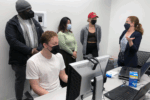
Co-taught by faculty from the Wharton Neuroscience Initiative and the Marketing Department, Visual Marketing (MKTG 239/739) gives Penn students hands-on experience with how visual perception influences consumer behavior. Blending neuroscience, analytics, and brand strategy, the course combines classroom instruction with eye-tracking labs, fieldwork, and real-world projects with industry partners like The Hershey Company. Students explore how design, packaging, and visual storytelling shape decision-making—equipping them with a modern, data-informed approach to marketing.Read More